
How to Talk About EDI in Today’s Political Headwind
There’s a particular quiet that settles over EDI conversations now, a kind of tension that is less about apathy or disagreement and more about cultural angst in a strange new global socio-political climate. You can see it in the way someone begins a thought, hesitates, and then reaches for something safer. You hear it when leaders ask for ‘the right wording', as though inclusion is a code they might accidentally break. You feel it when colleagues wait until the meeting ends to ask the questions they didn’t dare voice in front of others.
There’s a particular quiet that settles over EDI conversations now, a kind of tension that is less about apathy or disagreement and more about cultural angst in a strange new global socio-political climate. You can see it in the way someone begins a thought, hesitates, and then reaches for something safer. You hear it when leaders ask for ‘the right wording', as though inclusion is a code they might accidentally break. You feel it when colleagues wait until the meeting ends to ask the questions they didn’t dare voice in front of others.
It’s the same emotional terrain I wrote about when I tried to explain why EDI can feel impossible. The work is heavy because it shapes the lived experience of real people. It affects who feels safe, who feels seen, who gets to participate fully. When the stakes are human, the fear of mis-stepping becomes not just a professional concern, but a moral one. This weight can make even the most well‑intentioned person retreat into silence.
That fear hasn’t emerged in a vacuum. The political climate around EDI has been deliberately reshaped globally, particularly since the 2024 United States election cycle. Trump has delivered on his election promises and has targeted Diversity and Inclusion initiatives directly, not only through rhetoric but through a series of executive orders designed to dismantle federal programmes, restrict gender‑inclusive policy, and signal to organisations that inclusion work now puts you at odds with the government of the world’s largest economy. These orders created a climate of fear and uncertainty, and that fear has travelled far beyond Washington.
The ripple effects of this can be seen in the private sector worldwide. Even before the election, several major US corporations began quietly stepping back from their DEI commitments. This trend started to kick off after the Students for Fair Admissions US Supreme Court decision, and the retreat has accelerated since. Companies like McDonald’s and Meta ended their DEI goals, not because the evidence changed, but because the political risk did. As — despite the best efforts of the second Trump administration — the US remains a cultural and economic centre of gravity, the impact hasn’t stayed contained. International companies with US footprints have begun scaling back their own DEI work, worried about legal exposure or reputational backlash. Despite not being directly bound by the executive orders, many companies headquartered outside the US now also feel pressured to abandon or dilute their commitments.
This is the backdrop against which many of us are now trying to hold conversations about inclusion. The work needs honesty, but the climate rewards caution. The work needs curiosity, but the climate rewards silence. And the emotional labour of navigating that tension is real.
However, not all is lost just yet. I recently came across an article titled The anti-DEI agenda: navigating the impact of Trump's second term on diversity, equity and inclusion (Ng E. et al, 2025) where half a dozen different DEI scholars and professionals from around the world shared their thoughts on how DEI initiatives have been affected in their corner of the world, including India, South Africa and the UK. While the alarm bells are at the ready, they all agreed that this backlash is not universal, inevitable, or permanent. One of the contributors, writing from a Danish perspective, describes a very different landscape: one where DEI continues to thrive because it is understood as a driver of fairness, wellbeing, and organisational strength. Her optimism is grounded in the simple truth that inclusion work succeeds when it is tied to values organisations refuse to compromise on. She reminded me that DEI is not an American invention that lives or dies with US democracy. It is a global movement shaped by local histories, legal frameworks, and social expectations. The current backlash may be loud, but it is not the whole story.
That perspective matters, because it helps us hold two truths at once: the political pressure is real, and the need for the work is unchanged. The fear is understandable, and the work is still possible. The climate is hostile, and progress continues in places where organisations remain anchored in their values.
So when I walk into a room where people are afraid of saying the wrong thing, I try to start by naming the fear rather than pretending it isn’t there. When I acknowledge it, like when I say, ‘I know this feels difficult to talk about’, it is easy to notice a shift. People stop bracing. The room becomes less brittle. The conversation becomes possible again. Fear grows when it’s unspoken and it eases when it’s recognised.
What I refuse to do is step into the role of moral judge. Too many people have come to believe that EDI is about catching others out, and too many practitioners have been positioned as the organisation’s conscience. That dynamic shuts down curiosity. It makes people perform correctness instead of engaging with complexity. I don’t want to be the person who polices language, but rather one who educates. I want to be the person who helps people think, because thinking is where change begins.
When I frame the work as something we are all responsible for, something we are all learning our way through, people stop worrying about being wrong and start focusing on being real. Then, the real work can actually happen. It is where someone admits they don’t understand a policy. It is where someone voices a concern they’ve been carrying quietly for months. It is where you can finally see the gap between intention and impact.
Clarity helps too. Explaining policy without turning it into slogans and focusing on testimonials and real-life examples gives people something solid to hold onto. When people understand the purpose behind a policy decision, meaning they understand the inequality or harm it’s meant to reduce, the experience it’s meant to improve, they stop obsessing over whether their phrasing is perfect. It gives them a way to stay in the conversation without feeling like they’re walking a tightrope.
Talking about EDI in this moment requires a kind of courage that doesn’t announce itself. It looks like asking a question you’re not sure you’ve phrased well. It looks like admitting you don’t know something. It looks like choosing clarity over comfort. It looks like staying in the conversation even when your instinct is to retreat. In the current headwind, it might very well be easier not to engage in D&I practices. That, however, does not mean it is the correct decision for the employees, the company’s present and future credibility, or its bottom line.
If there’s a guide here for D&I professionals, it’s this: let your leaders know that the goal isn’t to speak flawlessly. The goal is to speak responsibly, openly, and with a willingness to learn even when it is difficult. The work doesn’t move because we get every word right. It moves because we keep talking, even when the air feels heavy. The long-term benefits of a functioning EDI strategy far outweigh the negatives. The initial clunkiness of language, much like the present corporate retreat from D&I, will be rapidly fleeting. The real cost comes from abandoning the work, not from staying the course.
And if you’re the one holding space for these conversations, if you’re the person others look to when they’re afraid of mis-stepping, remember that you don’t have to carry the fear for everyone else. Your job isn’t to absorb it. Your job is to make room for the truth and let the evidence convince them.

The myths and misunderstandings behind ineffective D&I: Basing your Diversity & Inclusion strategy on data
This post is drawing on Chapter 6 of Heidi R. Andersen’s Diversity Intelligence from 2021, one of the most useful reads I found when getting into EDI.
Diversity strategy has to be driven by data, and for that to be possible, one of the first steps in every EDI department must be a well-designed inclusion survey. “An inclusion survey is essentially a perception gap analysis, which shows the level of inclusion that different identity groups within your company experience and how they thrive differently in this culture” writes Heidi R. Andersen. This quote is so essential that anyone tasked with doing any sort of diversity & inclusion work might as well write it on a post-it note and stick it somewhere around their workstation. It should be a constant reminder that the relational, human side of EDI relying on soft-skills and the technical, evidence side are not rivals but partners.
This post is drawing on Chapter 6 of Heidi R. Andersen’s Diversity Intelligence from 2021, one of the most useful reads I found when getting into EDI.
Diversity strategy has to be driven by data, and for that to be possible, one of the first steps in every EDI department must be a well-designed inclusion survey. “An inclusion survey is essentially a perception gap analysis, which shows the level of inclusion that different identity groups within your company experience and how they thrive differently in this culture” writes Heidi R. Andersen. This quote is so essential that anyone tasked with doing any sort of diversity & inclusion work might as well write it on a post-it note and stick it somewhere around their workstation. It should be a constant reminder that the relational, human side of EDI relying on soft-skills and the technical, evidence side are not rivals but partners.
But how do we go about gathering the data we need to build an effective EDI strategy on?
Start by being clear about the decision you want the data to inform. If your leadership asks for a survey because they read somewhere that they should measure inclusion, push back gently and ask what decisions the results should enable. Are you trying to reduce employee turnover in a particular department, make promotion processes more transparent, or test whether a recent policy change actually improved employee well-being? Naming the decision narrows the scope, keeps the survey useful, and prevents measurement from becoming a vanity exercise. Once you know the decision, design a mixed method approach that gives you both the where and the why: a concise, validated questionnaire to produce reliable, segmentable metrics, and a set of interviews or focus group discussions to surface the lived experience behind the numbers. Quantitative items should map to core outcomes you care about like belonging, psychological safety, perceived fairness of promotion and pay, and intent to stay. At the same time, the demographic and role data let you cross‑tabulate and find the perception gaps that matter. The qualitative work is equally as important. It explains the anomalies and points to practical fixes you would be unlikely to have guessed from numbers alone.
One of the clearest lessons in Andersen’s chapter is how measurement exposes holes in what organisations think they know about people and motivation. A common myth we still hear is that fewer women reach senior roles because fewer women want them. Andersen describes a striking example that overturns that assumption: in a set of inclusion surveys her company, the Living Institute ran across seven financial institutions, women scored themselves higher on leadership ambition than men did. The chapter reports that female respondents averaged 8.5 out of 10 on ambition compared with 7.6 for men, and senior women scored 9.7 versus 8.8 for senior men.
“In fact, the reality revealed over and over again in our inclusion surveys, as well as other research like a 2017 study from the Boston Consulting Group, is that women are already more ambitious than their male colleagues and this idea that they do not want leadership positions simply is not true.”
Thus, there is a better explanation for why there are fewer women compared to men in senior leadership:
“The data demonstrated that male leaders exhibited an unconscious bias against female leadership talent, which was the real reason why more women had not advanced to higher leadership positions.”
That reversal matters because it changes the remedy. If you believe the problem is a lack of ambition, you design programmes to “fix” women: confidence workshops, motivation seminars, more networking events. If the data shows ambition is present but leadership pipelines and decision‑making are biased, the right response is structural: transparent promotion criteria, sponsorship programmes that hold leaders accountable, inclusive leadership training that helps managers recognise and develop talent they might otherwise overlook. Andersen’s point is simple and practical: measurement doesn’t just validate intuition, it also reveals where your intuition is wrong and where your energy will actually move the needle.
So when you plan a D&I survey, design it to test the assumptions that matter. Ask whether leaders can see the talent in front of them, whether promotion criteria are applied consistently, and whether those who aspire to lead have equal access to sponsorship and stretch assignments. Use surveys to surface ambition and perception gaps, and use interviews to explain why those gaps exist. Then translate the findings into targeted interventions that change leader behaviour and system design rather than trying to change people who are already ready and willing.
Leaders will only fund measurement if you show how it links to business outcomes. Build a one‑page dashboard for the executive team that ties three headline inclusion metrics to concrete operational impacts: turnover cost, time to fill critical roles, and customer or product outcomes where relevant. Put a short qualitative excerpt on the page so the numbers have a human face. A single, well‑chosen story often does more to shift minds than a table of statistics.
Beware the common pitfalls that turn data into theatre. Running a one‑off survey without a published action plan breeds cynicism. It is hard to understate how important it is to follow up with a clear action plan as soon as possible after the data has been collected. D&I strategy that takes too long to see the light after promises made next to an inclusion questionnaire will more likely than not cost you employee trust and buy-in motivation.
Another thing to keep in mind about publishing inclusion data is that over‑segmenting small populations risks identifiability, so set minimum cell sizes and combine categories where necessary to protect confidentiality. Make sure that you are also not ignoring qualitative signals because the quantitative numbers ‘look fine’. This is a fast route to missed risk, so treat open text and interviews as equal evidence. Lastly, make sure to never use data to punish individuals. Even if lower satisfaction numbers are clearly linked to particular department heads, measurement and the publishing of data must be diagnostic and developmental, not punitive. Use this data as an opportunity to encourage personal and professional growth, for example through inclusive leadership training offers.
Finally, keep the human work front and centre. Measurement is a muscle you build, not a report you file. Use the data to open conversations, not to close them. Share findings with humility, invite interpretation from the groups most affected, and co‑design solutions where possible. The soft skills you already use, like listening, convening, translating between lived experience and operational levers are what make data useful. When you combine disciplined measurement with the relational work of securing buy‑in, EDI stops feeling like an optional extra even for the most sceptical, and becomes a practical, measurable route to happier employees and better business.
Well-being and the bottom line: The Multifaceted value in Effective E.D.I Practices.
When I started Field Notes I expected an audience of mostly professionals already around Human Resources, People & Culture and of course Equality, Diversity and Inclusion. I expected discussions, perhaps encouragement and the occasional tough question. Recently a reader from a completely different industry challenged me directly, suggesting that EDI/DEI is “a waste of time and resources.” I took this remark as a professional prompt rather than a personal slight. It asked me to explain, plainly and persuasively, why this work matters to people and, perhaps more importantly for those who don’t see the inherent value in EDI practices, why it matters to the bottom line.
When I started Field Notes I expected an audience of mostly professionals already around Human Resources, People & Culture and of course Equality, Diversity and Inclusion. I expected discussions, perhaps encouragement and the occasional tough question. Recently a reader from a completely different industry challenged me directly, suggesting that EDI/DEI is “a waste of time and resources.” I took this remark as a professional prompt rather than a personal slight. It asked me to explain, plainly and persuasively, why this work matters to people and, perhaps more importantly for those who don’t see the inherent value in EDI practices, why it matters to the bottom line.
EDI matters for people. Good diversity & inclusion work changes everyday realities. Clearer hiring and promotion processes, pay equity checks, better parental leave and stronger support networks reduce friction for employees. Those changes matter in human terms: less burnout, fewer micro barriers and a greater sense of belonging. The sense of being welcome and valued at a company should not be seen as a luxury. When people feel included they stay longer, collaborate more effectively and bring more of themselves to the work. Seen this way, the human case and the business case are the same argument from different angles.
The economic case is where many sceptics pause, so I will be explicit. Large, recent studies show that companies with more diverse leadership are materially more likely to outperform their peers. McKinsey’s 2023 report, Diversity Matters Even More, finds that companies in the top quartile for gender diversity on executive teams are about thirty nine percent more likely to financially outperform other firms in their industry and region. The same research links leadership diversity with higher social and environmental impact scores. That is not a rhetorical flourish. It is a statistical pattern observed across 1,265 companies in 23 countries and across multiple industries. The report notes plainly that “the business case is the strongest it has been since we’ve been tracking” and that "that leadership diversity is also convincingly associated with holistic growth ambitions, greater social impact, and more satisfied workforces”.
The World Economic Forum’s 2025 Lighthouses work complements that finding by showing how well-designed programmes convert intention into measurable business value. The WEF writes that “well-calibrated diversity, equity and inclusion strategies attract and retain the best talent and improve overall employee wellbeing, productivity and innovation outcomes”. Its case studies document concrete interventions that produce measurable results: pay equity audits, transparent hiring and promotion processes, targeted skills training linked to hiring pipelines and supplier diversity programmes. Those are system changes, not symbolic gestures, and the evidence in the WEF collection shows how they scale impact across organisations and markets.
What does this mean in practice? First, representation at the top matters because leadership shapes strategy, risk appetite and culture. Diverse executive teams and boards bring different perspectives to complex decisions and are less likely to suffer from groupthink. McKinsey’s analysis shows that boards with greater gender diversity are significantly more likely to outperform financially, and that the statistical case for ethnic diversity on boards is now emerging as well. Second, there is a cost to lagging. Companies that sit in the bottom quartile for both gender and ethnicity face a growing disadvantage. Third, the benefits are not limited to profit and loss lines. Leadership diversity correlates with stronger environmental, social and governance performance and with workforce metrics that reduce turnover costs and improve productivity.
If you think EDI is symbolic or purely cosmetic, the evidence points in another direction. The most effective initiatives are systemic rather than performative. The WEF emphasises changing systems rather than relying on attitudinal training alone. Pay equity reviews, transparent hiring and promotion criteria, equitable parental leave and supplier diversity programmes are the kinds of interventions that produce sustained returns. The Lighthouse cases show measurable outcomes such as higher hiring and placement rates for targeted groups, improved retention and demonstrable increases in participation in sectors where representation was previously low. When EDI is governed with the same rigour as other business objectives it stops being an open-ended expense and becomes an investment with measurable returns.
There is a practical test for whether EDI will be a cost centre or a strategic lever. Good programmes measure representation and experience, set clear time bound goals, assign senior accountability, fix systems rather than only running awareness training, adapt to local contexts and track outcomes rigorously. These are governance practices. They require discipline and investment, but they also reduce waste: fewer bad hires, less turnover, fewer legal and reputational risks and better product market fit because teams reflect customers. That is why investors and boards are paying attention.
I do not pretend EDI is a magic bullet. It will not fix every problem overnight. It requires time, resources and honest leadership. The stronger critique is not that EDI is pointless; it is that it is often done poorly. That is a fair critique, and it is fixable. The right response is not to abandon the work but to demand better design, clearer metrics and stronger accountability.
For readers who remain sceptical, the most useful question is not whether EDI is morally desirable but whether it is well-designed. Ask for the metrics. Ask how a programme will be measured, who is accountable and what the governance looks like. If someone dismisses EDI as “just feel-good work,” ask them for the data behind that claim. The conversation should move from slogans to evidence and from gestures to EDI project management and MEAL.
Being professionally challenged by a reader was useful because it forced me to translate conviction into evidence and action. EDI is not an optional extra if you want your company to succeed. It is a set of practical, measurable changes that improve people’s lives and, increasingly, organisational performance. If you want to judge whether it matters for your organisation, start with the data and the systems. The recent reports I have been reading provide the empirical backbone for these claims and document the kinds of interventions that convert good intentions into measurable outcomes.
Read more here!
”McKinsey & Company Diversity Matters Even More: The case for holistic impact November 2023”
https://www.mckinsey.com/featured-insights/diversity-and-inclusion/diversity-matters-even-more-the-case-for-holistic-impact#/
“World Economic Forum Centre for the New Economy and Society Diversity, Equity and Inclusion Lighthouses 2025 INSIGHT REPORT JANUARY 2025” https://reports.weforum.org/docs/WEF_Diversity_Equity_and_Inclusion_Lighthouses_2025.pdf
“EY DE&I interventions that deliver What works across multiple characteristics January 2025”
https://www.ey.com/content/dam/ey-unified-site/ey-com/en-uk/newsroom/2025/01/de-and-i-interventions-that-deliver.pdf
The Worthwhile Chase of Everything that Cannot be.
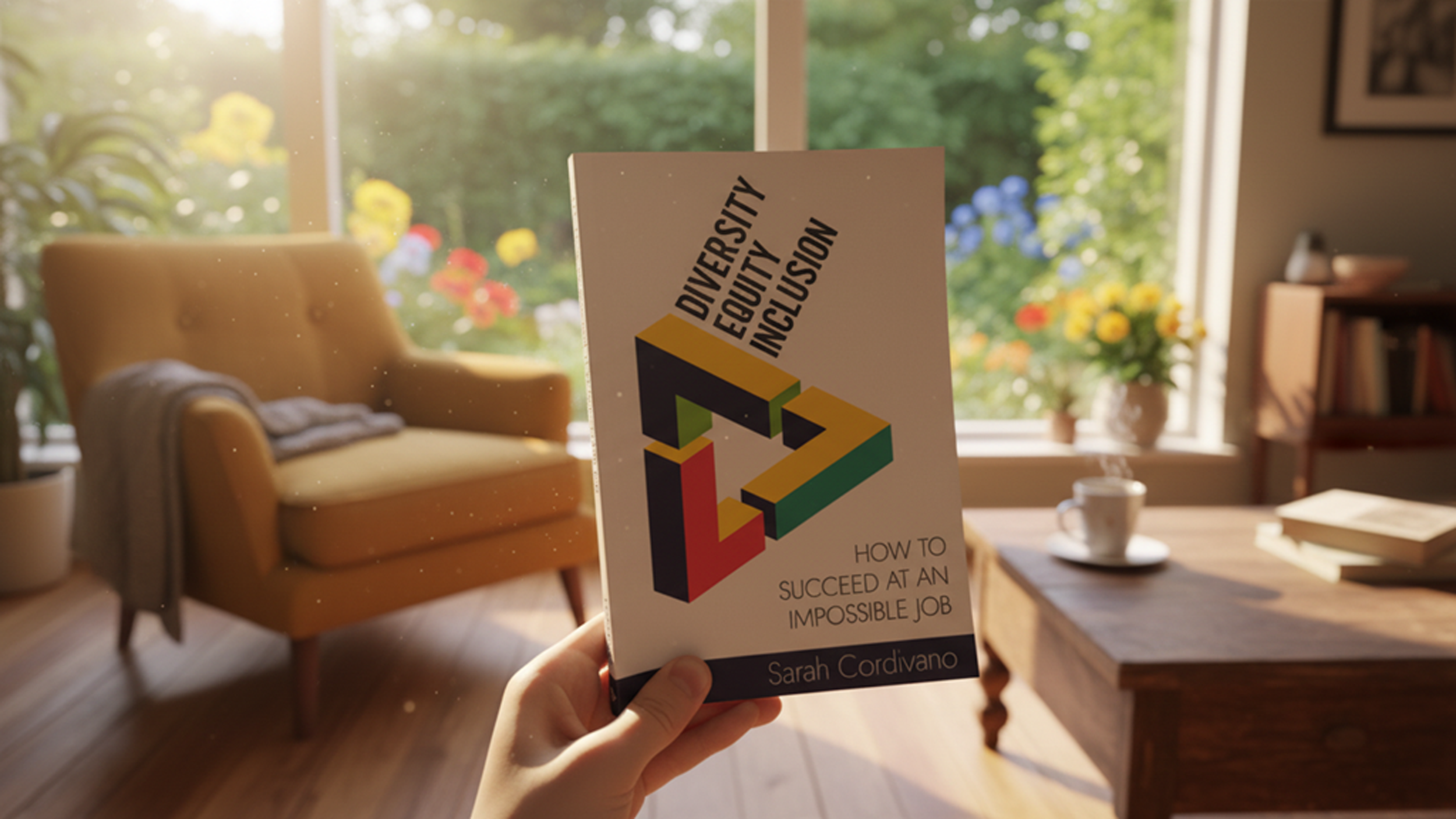
After coming back from a career break, I did what most of us do when we’re trying to get back into the rhythm of work: I read everything I could get my hands on from people in the field. One line from Sarah Cordivano stuck with me more than anything else. She wrote that "in many ways, a DEI job is an impossible job [...because...] it is impossible to achieve all the things you want in your DEI work”. That sentence has been echoing in my head ever since, mostly because as much as my first instinct was to deny it, it’s true. This, however, does not mean that trying to do the impossible is not worthwhile.
After coming back from a career break, I did what most of us do when we’re trying to get back into the rhythm of work: I read everything I could get my hands on from people in the field. One line from Sarah Cordivano stuck with me more than anything else. She wrote that "in many ways, a DEI job is an impossible job [...because...] it is impossible to achieve all the things you want in your DEI work”. That sentence has been echoing in my head ever since, mostly because as much as my first instinct was to deny it, it’s true. This, however, does not mean that trying to do the impossible is not worthwhile.
One of the biggest challenges is the sheer backlog you inherit the moment you step into a DEI role. Years of unresolved complaints, ignored concerns, and abandoned ideas land on your desk on day one. People come to you carrying frustration, disappointment, or exhaustion, and you’re expected to help them make sense of it, and you often must do all this without the authority or resources to fix the underlying issues.
Then there’s the expectation that you’ll deliver visible change without the budget to match the ambition. You’re handed responsibility without the tools, urgency without support, and a long list of hopes that far exceed what one person or one small team can realistically deliver. It’s a strange position to be in: everyone wants progress, but very few want to be part of the work themselves.
The emotional side of the work is just as heavy. DEI isn’t abstract. People come to you with experiences of discrimination, unequal pay, harassment, or the slow, grinding loneliness of being the only one in the room. When an organisation fails someone, they often arrive at your door at the moment it becomes too much. You end up holding space for their pain while also trying to navigate the system that caused it. None of this is in the job description, but it’s the reality of the role.
And because the work can be so reactive, it’s easy to fall into the trap of constant in crisis‑management mode. But you can’t fix every issue one by one, especially not sustainably.
There are ways to make the work feel less impossible. The first is clarity: clarity about whether your role is internal or external, clarity about the resources you actually have, and clarity about what is within your control. Without that, the job expands endlessly until it becomes unmanageable.
The second is strategy. At some point, you have to step back and build a strategy that actually moves things forward: this is at the heart of succeeding in diversity & inclusion. That means prioritising, setting boundaries, and aligning the interests of people who don’t always agree with each other. A DEI strategy isn’t a nice‑to‑have, but rather the only way to stop drowning in individual issues. It helps you decide what gets attention now, what has to wait, and what simply isn’t feasible yet.
And finally, there’s the pressure we put on ourselves. Many of us come into this field because we care deeply about the issues. But no one can meet every expectation placed on them. The work is too broad, the systems too complex, and the needs too varied. Letting go of the idea that you must fix everything is not giving up, but rather it’s how you stay in the field long enough to make a difference.
DEI feels impossible not because we’re failing, but because the work sits at the crossroads of structural problems, institutional hesitation, and human emotion. Naming that reality doesn’t make the work easier.
However, it does make it more honest, and honesty is a much better starting point than pretending the job is something it isn’t.

Turning Values Into Outcomes
Vivien Molnár introduces Field Notes, a blog shaped by her work in human rights, public policy, and EDI/DEI. She argues that good intentions and theory are not enough without understanding how organisations actually work, including constraints, resources, and decision-making. The blog aims to explain equality issues in plain language, focus on what works in practice, and help reduce harm and burnout in a politicised climate. The first main post asks: why does diversity and inclusion feel like an impossible job?
Hello Dear Reader!
My name is Vivien Molnar, and this is my first ever blog post. My education and career trajectory has taken me from human rights advocacy, international development and public policy discussions to the increasingly contested and politicised terrain of EDI (or DEI as folks outside the UK use it usually).
This career path has taught me one of the most important lessons about the intersection of these two fields: having the right intent, values and in-depth theoretical knowledge about equality, diversity and inclusion issues is far from a guarantee to achieving meaningful change in workplaces that benefits everyone on the career ladder. Only through understanding operational constraints and working with the systems that make or break EDI interventions can we prevent crashing and burning against the backdrop, while accomplishing very little.
Throughout my career, I have worked across civil society and organisational contexts, navigating the practical realities of project delivery, budget management, partnership building, and stakeholder engagement. I have drafted funding applications and legal-facing policy materials, coordinated cross-border cooperation, and translated community experiences into institutional language that claims to be evidence-based and actionable. Alongside this, I have worked within diversity & inclusion infrastructures where the disconnect between resources and expectations from the role created constant struggle and I had to navigate in the environment with great care. Not to mention, that all this is happening during a time where the whole notion of EDI became openly politicised and contested in major election campaigns, despite - or perhaps exactly why - how very few outside the field itself understands what it stands for and how it benefits companies that make it a core part of their operational identity. These experiences form the empirical foundation of this blog.
Field Notes is the space where I bring these experiences into public view. It is written for community organisers and right advocates attempting to remain sustainable under pressure, for managers navigating imperfect organisational systems, for policymakers trying to understand how decisions translate into practice, and for EDI professionals who need to know they’re not alone with their struggles.
My bread and butter has always been LGBTQ+ rights and equity issues, as this is where most of my research during my education was focused, and this is where I have lived experience giving me unique insights. This, however, does not mean that this is the only topic I am interested in covering. I want to focus on the parts of equality work that are often discussed loudly but understood poorly: the day‑to‑day realities of EDI/DEI roles, the tensions in sports policy, the practical meaning of the Equality Act, and how organisations approach compliance when the political climate is unstable. My aim is to explain these issues in plain language, grounded in what actually happens inside institutions rather than in abstract debates.
I’ll look at what these systems require, where they fall short, and how people working in this field, be it practitioners, managers, or early‑career professionals, can navigate them with more clarity and less burnout. The emphasis is on what is workable, what has real impact, and how harm can be reduced even when conditions are imperfect.
I am writing this now because equality work is under strain on every front: legally, politically, culturally, and operationally. In the UK, LGBTQ+ rights—and trans inclusion in particular—have become recurring sites of institutional anxiety. Employers hesitate, public bodies overcorrect, and individuals are left to absorb the consequences. Simultaneously, the broader backlash against EDI has produced a distinctive organisational reflex: pause the work, minimise visibility, avoid scrutiny, as though silence were a neutral stance rather than a consequential one.
My analytical approach is grounded in evidence, empathy, and operational detail. I am interested in what works in practice. When examining an issue, I return to a consistent set of questions: what is happening, and what claims are being made about it; what legal, organisational, discursive, or political dynamics are driving those claims; who bears the cost, and how that cost materialises in everyday life and work; and what can realistically be done next. Often, the next step is not a transformative overhaul but a modest intervention with disproportionate impact: a policy clause that prevents forced outing; a stakeholder process that reduces backlash risk; a measurement framework that prevents inclusion work from collapsing into vibes; or a decision log that forces an organisation to acknowledge its own choices.
Ultimately, my intention is to help shift conversations from symbolism to outcomes. I want to make the legal, political, and operational landscape more intelligible, and to support choices that reduce harm and enhance dignity. And I want to insist, consistently and without apology, on a principle that is too often obscured: inclusion is not a sentiment. It is a series of decisions that benefits everyone.
The first substantive Field Note will follow shortly where I will ponder the question:
Why does diversity & inclusion feel like an impossible job?